
Yes, a voice doctor can help with difficulty swallowing. Voice specialists, also known as laryngologists, are ENT surgeons who focus on the larynx and throat, the same area that keeps swallowing safe. They can examine the throat directly, identify the cause of the problem and arrange the right treatment or further tests.
Swallowing difficulty, known medically as dysphagia, often occurs alongside voice changes. This is because voice and swallowing share many of the same muscles and nerves.
Contact Nick Hamilton Today on 020 7034 6053 or Book a Consultation
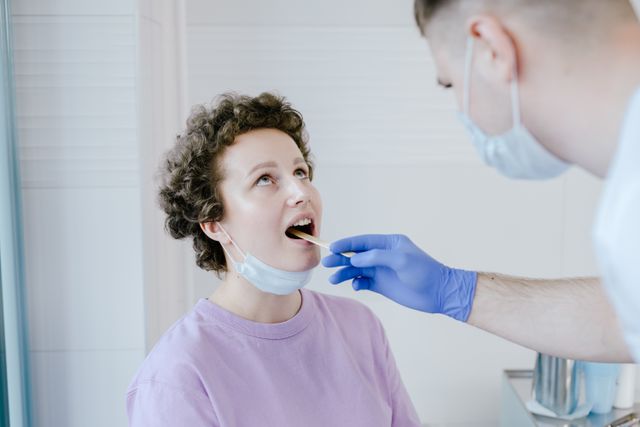
How Are Voice And Swallowing Connected?
Every time you swallow, the larynx lifts and the vocal cords close tightly to protect your airway. At the same time, a small flap called the epiglottis folds over the entrance to the windpipe, guiding food and drink past the airway and into the oesophagus.
Because the larynx plays such a central role, problems that affect the voice frequently affect swallowing too. A weak or poorly closing vocal cord can cause both a breathy voice and coughing when drinking. Inflammation from reflux can cause hoarseness alongside a feeling that food is sticking.
What Swallowing Problems Can A Voice Doctor Assess?
A voice specialist can assess many of the throat-related causes of swallowing difficulty, particularly where there is also a change in the voice.
Symptom | Possible Cause | What A Specialist Looks For |
|---|---|---|
Coughing Or Choking When Drinking | Incomplete vocal cord closure | Cord movement and airway protection |
Feeling Of A Lump In The Throat | Reflux, muscle tension or globus | Inflammation at the back of the larynx |
Food Sticking In The Throat | Narrowing, a pouch or a muscle problem | Structural changes in the throat and upper oesophagus |
Wet Or Gurgly Voice After Eating | Food or saliva pooling near the airway | Residue around the vocal cords |
Pain When Swallowing | Infection, inflammation or a lesion | Ulcers, swelling or abnormal tissue |
Weak Voice With Swallowing Difficulty | Vocal cord weakness or paralysis | Movement of each vocal cord |
One important example is vocal cord paralysis. When a vocal cord cannot move properly, often after thyroid, neck or chest surgery or following a viral nerve injury, the airway may not seal fully during swallowing. Treatments such as vocal cord injection can help the cords meet again, improving both the voice and the safety of the swallow.
What Tests Are Used To Investigate Difficulty Swallowing?
Assessment usually begins in clinic with flexible nasendoscopy, where a thin camera is passed through the nose to view the throat and larynx. You may be asked to swallow small amounts of coloured liquid or food during the examination. This is known as FEES, or fibreoptic endoscopic evaluation of swallowing, and shows how well the throat clears and protects the airway.
Depending on the findings, further tests may include:
- Videofluoroscopy, a moving X-ray of swallowing, often carried out with a speech and language therapist
- A barium swallow to show the shape of the oesophagus
- Oesophageal manometry to measure the strength and coordination of muscle contractions
- Reflux monitoring if laryngopharyngeal reflux is suspected
- CT or MRI scanning where a structural cause needs to be ruled out
These investigations follow a similar approach to how voice disorders are diagnosed, starting with direct examination and adding tests only where they will change treatment.

What Treatments Are Available For Swallowing Problems?
Treatment depends entirely on the cause. Swallowing difficulty linked to reflux often improves with lifestyle changes and medication, as explained in our guide to reflux and its effect on the voice. Muscle tension around the throat may respond to targeted therapy and relaxation techniques.
Swallowing rehabilitation with a specialist speech and language therapist teaches exercises, safe postures and techniques that make eating and drinking easier. Where there is a physical cause, procedures may include stretching a narrowed area, treating a pharyngeal pouch or injection treatment for a vocal cord that is not closing.
Many people benefit from a team approach involving ENT surgeons, speech and language therapists, gastroenterologists and dietitians. For dedicated information on throat, swallowing and cough problems, the Throat Specialist website covers these conditions in more depth.
When Should I Seek Help For Difficulty Swallowing?
You should seek medical advice if swallowing has become difficult or uncomfortable, if you cough or choke when eating or drinking, or if food feels as though it is getting stuck. The NHS guidance on swallowing problems advises asking for an urgent GP appointment for these symptoms.
Some signs need prompt specialist assessment, including:
- Difficulty swallowing that is getting steadily worse
- Unexplained weight loss
- Hoarseness lasting more than three weeks alongside swallowing problems
- Repeated chest infections, which can signal food or drink entering the airway
- Pain on swallowing that does not settle
If you cannot swallow at all, including your own saliva, seek emergency care. Our guide on when to see a voice specialist explains which voice and throat symptoms should be checked and how quickly.
To discuss swallowing difficulties or book a consultation with voice specialist Mr Nick Hamilton at The London Clinic or One Welbeck, call 020 7034 6053.