Voice deepening can sometimes be improved or adjusted, but it cannot always be fully reversed, depending on what caused the change. In cases where voice deepening is due to tension, vocal habits or misuse, voice therapy can often help restore comfort, flexibility and a more natural sound. Where structural changes are involved, such as hormonal effects, options may be more limited.
Understanding the cause of voice deepening is the first and most important step.
Contact Nick Hamilton Today on 020 7034 6053 or Book a Consultation
Can Voice Deepening Be Reversed?
Sometimes, yes, but not in all cases. Voice deepening caused by muscle tension, strain or inefficient voice use can often be improved with specialist voice therapy. However, voice deepening caused by permanent structural changes to the vocal cords cannot usually be fully reversed.
This is why assessment matters. Two people with similar-sounding voices may need very different approaches depending on what is happening at vocal cord level.
What Causes Voice Deepening In The First Place?
Voice deepening can be caused by vocal habits, strain, hormones, medical conditions or structural changes to the vocal cords. Common reversible causes include chronic throat tension, incorrect voice training and compensatory speaking patterns developed over time.
Less reversible causes include hormone-related changes, vocal cord thickening or scarring, and some neurological or medical conditions. In these cases, therapy focuses on improving voice quality and comfort rather than reversing pitch entirely.
| Cause Of Voice Deepening | Can It Be Reversed? | Typical Support |
|---|---|---|
| Vocal tension or strain | Often | Voice therapy |
| Habitual voice use | Often | Technique retraining |
| Hormone-related changes | Rarely | Voice optimisation |
| Structural vocal changes | Limited | Specialist assessment |
Can Voice Therapy Help Reverse Voice Deepening?
Yes, voice therapy can help improve voice quality and flexibility when deepening is caused by functional or behavioural factors. Therapy works by reducing excess tension, improving breath support and helping the voice function more efficiently.
Even when pitch cannot be fully changed, many people experience a voice that feels lighter, clearer and more controlled. This often improves confidence and reduces fatigue, even if the overall depth remains similar.
What Are The Limits Of Reversing A Deeper Voice?
Voice deepening caused by permanent vocal cord changes cannot usually be reversed completely. Hormone-related changes, particularly from testosterone, tend to be long-lasting and unpredictable.
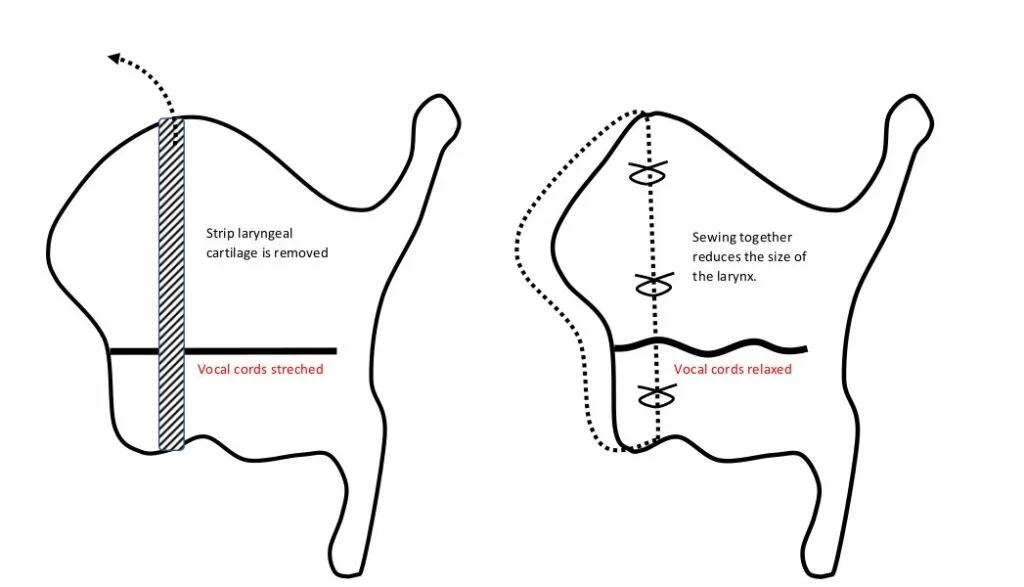
In these cases, therapy focuses on helping the voice work as comfortably and naturally as possible. Surgical options exist in very limited circumstances but are rarely recommended due to risk and variable outcomes.
What Results Are Realistic To Expect Reversing Voice Deepening?
Most people can expect improvement in comfort, control and vocal confidence rather than a dramatic change in pitch. Listeners often notice the voice sounds more relaxed or natural, even if it is not significantly higher.
Clinical experience shows that targeted voice therapy can reduce strain and vocal fatigue in the majority of patients seeking voice modification. These functional improvements are often more valuable than pitch change alone.
When Should I See A Voice Specialist To Reverse Voice Deepening?
You should see a voice specialist if your voice has deepened unexpectedly, feels uncomfortable, or no longer sounds like you. Sudden changes, ongoing hoarseness or loss of control should always be assessed.
A specialist can examine the vocal cords, identify the cause of the change and explain what improvement is realistically possible. Early assessment helps avoid unnecessary strain and long-term damage.
To discuss voice deepening concerns or book a consultation with voice specialist Mr Nick Hamilton at The London Clinic or One Welbeck, call 020 7034 6053.